Neuroplasticity and the Direction of Development
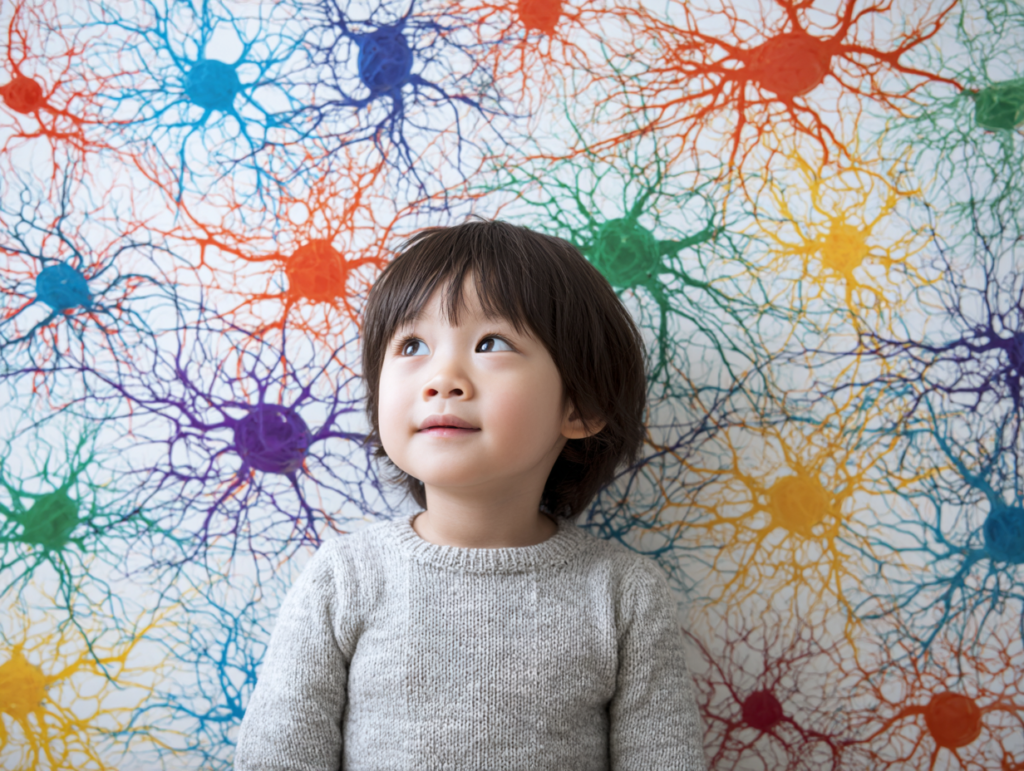
Children don’t just use environments.
They adapt to them.
Not in obvious ways. Not all at once.
But quietly, through repetition.
A child does something.
The environment responds.
The interaction repeats.
And over time, something begins to change—not just in behavior, but in how the child tends to respond.
This is easy to miss because it doesn’t look dramatic.
There is no clear moment where a shift happens.
Instead, patterns form gradually, beneath the surface.
Modern environments have always shaped development in this way—family dynamics, school systems, social interactions. Each leaves its imprint, not by force, but by repetition.
What is different now is not that children are being shaped.
It is the nature of the environment they are adapting to.
For the first time, children are interacting with systems that respond instantly, adapt continuously, and remove many of the natural frictions that used to be part of learning and thinking.
And when an environment changes, the patterns that form within it begin to change as well.
The brain does not simply absorb information from these environments.
It reorganizes itself around them.
Which means:
AI is not just something children use.
It is something they are adapting to.
What Neuroplasticity Actually Means
The brain is not fixed.
This is one of the most important discoveries in modern neuroscience.
For a long time, it was believed that the brain developed early in life and then remained largely unchanged. But we now know that the brain is continuously adapting—reshaping itself based on experience.
This ability is called neuroplasticity.
At its simplest, neuroplasticity means this:
The brain changes in response to what it repeatedly does and experiences.
Not occasionally. Not dramatically.
But steadily, through repetition.
This change does not happen at the level of thoughts alone.
It happens in the structure and activity of neural networks.
When certain patterns of thinking, feeling, or responding are used again and again, the brain becomes more efficient at activating those patterns. Connections between neurons strengthen. Pathways become easier to use.
A common way to describe this is:
“Neurons that fire together wire together.”
But what matters is not the phrase—it’s what it implies.
The brain is not just learning information.
It is learning patterns of response.
Over time, this creates a simple but powerful effect:
What we do repeatedly becomes easier, faster, and more automatic.
Not because we decide it should be that way,
but because the brain has adapted to support it.
It’s important to clarify something here.
Neuroplasticity does not directly create traits like patience, confidence, or independence.
Instead:
Repeated experiences strengthen the patterns through which we respond to situations.
And over time, those reinforced patterns begin to look like traits.
For example:
A child encounters uncertainty.
- If they repeatedly pause, think, and tolerate not knowing,
the brain strengthens patterns associated with delay and regulation.
Over time, this is experienced as patience. - If they repeatedly resolve uncertainty instantly,
the brain strengthens patterns associated with immediate resolution.
Over time, this is experienced as impatience.
The same applies more broadly.
What we call personality, habits, or tendencies are not built in a single step.
They emerge from accumulated patterns of response.
Which leads to a simple but important understanding:
The brain does not just learn what to do.
It becomes shaped by how it repeatedly responds.
And this is where the environment becomes crucial.
Because the environment determines:
- what situations are encountered
- what responses are encouraged
- and what patterns are repeated
Over time, this quietly guides how the brain organizes itself.
If the environment changes,
the patterns change.
And if the patterns change,
the direction of development changes with them.
How Patterns Become Traits

If neuroplasticity explains that the brain changes,
the next question is:
How do repeated experiences turn into something like patience, attention, or independence?
The answer is not through a single change,
but through a repeating process.
We can understand it as a simple loop:
Situation → Response → Repetition → Reinforcement → Trait
Step 1 — Situation
Every pattern begins with a situation.
A child encounters:
- a question
- a delay
- boredom
- uncertainty
- a challenge
These are small, everyday moments—but they matter.
Step 2 — Response
In that moment, the child responds in some way.
They might:
- wait and think
- seek an immediate answer
- tolerate the discomfort
- escape it quickly
This response is not random.
It is shaped by what is available and what works.
Step 3 — Repetition
The same kinds of situations appear again and again.
And often, the same responses are used again and again.
Not intentionally—but because they are:
- easier
- faster
- more available
Step 4 — Reinforcement
With repetition, the brain adapts.
The neural patterns involved in that response become:
- more efficient
- more accessible
- more automatic
The response requires less effort each time.
Step 5 — Trait
Over time, this reinforced pattern no longer feels like a choice.
It feels like:
- “this is how I am”
- “this is how I react”
And we give it a name:
- patience
- impatience
- focus
- dependency
- confidence
But underneath, these are not fixed qualities.
They are:
the result of patterns that have been repeated and reinforced over time.
This leads to an important shift in perspective.
Traits are not directly built.
They emerge.
A child is not “taught patience” in a single moment.
Instead, they experience many small situations where they:
- wait
- tolerate
- remain with uncertainty
And through repetition, the brain becomes better at that pattern.
Eventually, we call that patience.
The same process works in the opposite direction.
If situations are consistently resolved quickly,
and delay is rarely experienced,
the brain becomes efficient at:
- avoiding uncertainty
- seeking immediate resolution
And this pattern is experienced as impatience.
So the question is not:
“What is the child learning?”
But:
“What patterns of response are being repeated often enough to become automatic?”
This is the level at which neuroplasticity operates.
Not at the level of single behaviors,
but at the level of patterns that accumulate into tendencies.
And once we see this clearly,
a deeper question begins to emerge:
If the environment changes the situations,
and the situations shape the responses,
then—
In which direction are these patterns being reinforced?
That is what we will call:
Plasticity Direction
Plasticity Direction
If repeated experiences shape patterns,
and patterns accumulate into traits,
then the next question is not simply:
Is the brain changing?
It is:
In which direction is it changing?
We can think of this as:
Plasticity Direction — the tendency of the brain to become more efficient at the response patterns it repeats most often.
This is important, because neuroplasticity itself is neutral.
The brain is not trying to make us:
- better
- worse
- smarter
- weaker
It is simply trying to become:
more efficient at what it does repeatedly
Which means:
The brain does not judge the patterns it strengthens.
It optimizes them.
If a certain way of responding is used often enough,
the brain adapts to support it.
Not because it is ideal—
but because it is frequent.
This leads to a subtle but powerful shift:
A brain shaped by repetition is not becoming “good” or “bad.”
It is becoming aligned with its environment.
Direction, Not Damage
This is where many discussions go wrong.
They frame change as damage:
- attention is “getting worse”
- patience is “declining”
- thinking is “weaker”
But from the perspective of neuroplasticity, this is not quite accurate.
What is happening is closer to this:
The brain is becoming more efficient at operating within the conditions it is repeatedly exposed to.
If those conditions favor:
- speed
- immediacy
- constant feedback
Then the brain adapts in that direction.
If they favor:
- reflection
- delay
- independent thinking
It adapts in that direction instead.
The Same Brain, Different Directions
The same brain, with the same potential,
can develop very different tendencies depending on:
- what situations are encountered
- what responses are repeated
- what patterns are reinforced
This is why two children,
with similar abilities,
can develop very different ways of thinking and responding—
not because of who they are,
but because of what patterns their environments repeatedly evoke.
A Simple Way to See It
You can think of it like this:
The brain becomes what it practices.
Not in a motivational sense—
but in a structural one.
Which brings us back to the environment.
Because if plasticity has a direction,
then the environment is what sets that direction in motion.
And today, one of the most influential parts of that environment is something new.
Something highly responsive.
Highly adaptive.
And almost always available.
AI as a Plasticity Accelerator
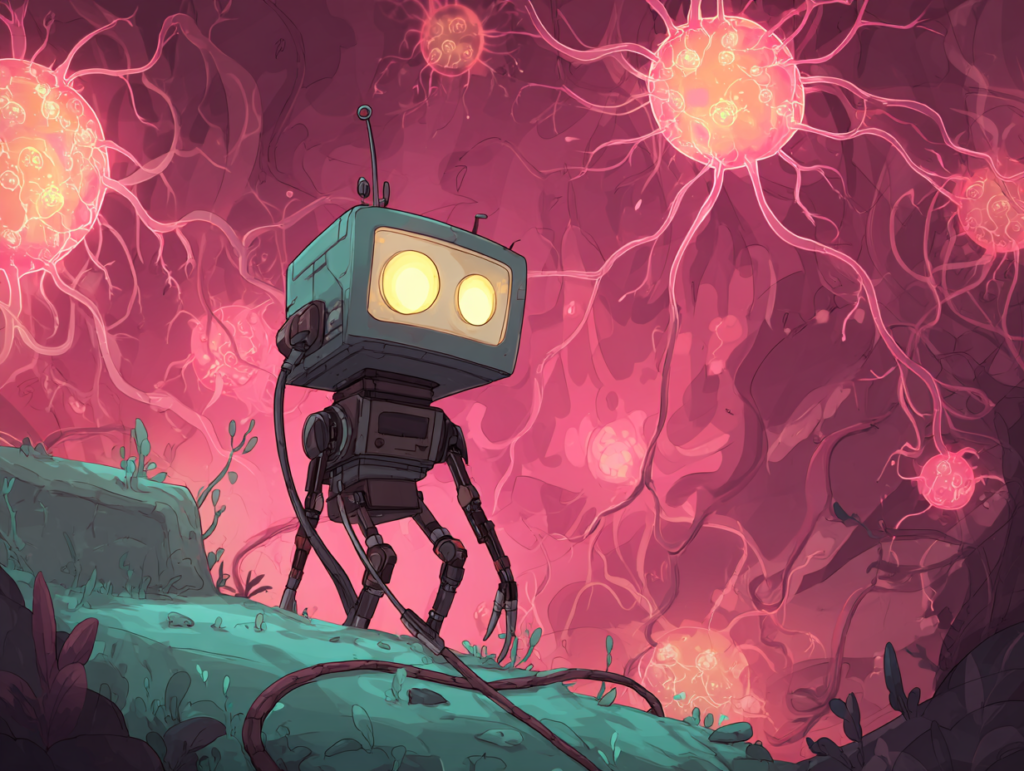
Neuroplasticity has always been part of development.
Children have always adapted to:
- family environments
- school systems
- social dynamics
What is new is not the existence of plasticity.
It is the nature of the environment the brain is adapting to.
AI introduces something different.
Not just new information—
but a new kind of interaction.
One that is:
- instant
- responsive
- adaptive
- and always available
In traditional environments, many responses required effort.
- Questions could remain unanswered
- Problems required time to solve
- Feedback was limited or delayed
There was friction.
And that friction played a role in shaping:
- patience
- persistence
- internal thinking
AI changes this.
It reduces friction.
A question does not need to stay open.
A difficulty does not need to be tolerated.
A thought does not need to be fully formed before being answered.
The environment responds immediately.
From the perspective of neuroplasticity, this matters.
Because when a pattern becomes:
- easier
- faster
- more reliable
it becomes more likely to be repeated.
And when it is repeated more often,
it is reinforced more quickly.
This is why AI can be understood as:
a plasticity accelerator
Not because it changes the brain in a new way,
but because it changes:
- how often certain responses are used
- how quickly they are reinforced
- and how consistently they are available
Faster Loops, Stronger Patterns
The loop we described earlier—
Situation → Response → Repetition → Reinforcement → Trait
—still applies.
But with AI, this loop can happen:
- faster
- more frequently
- with less resistance
A moment of uncertainty can be resolved in seconds.
A question can be answered instantly.
Feedback can be generated continuously.
This compresses the cycle.
And when the cycle compresses,
patterns form more quickly.
Not One Direction—But Stronger Direction
It’s important to emphasize:
AI does not push development in only one direction.
It can:
- support deep learning
- expand curiosity
- strengthen thinking
But it can also:
- reduce tolerance for delay
- shift reliance outward
- fragment attention
What changes is not just what happens—
but how strongly and how quickly patterns are reinforced.
Which brings us back to Plasticity Direction.
If AI accelerates the formation of patterns,
then the question becomes even more important:
Which patterns are being repeated most often?
Because whatever those patterns are,
the brain will adapt to them—
faster than before.
What This Looks Like in Practice
So far, we’ve looked at principles:
- neuroplasticity
- patterns of response
- plasticity direction
- acceleration
But what does this actually look like in everyday life?
Not in theory—but in small, repeated moments.
Speed vs. Reflection
A child encounters a question.
In one environment, the question stays open:
- they think
- guess
- struggle
- maybe get it wrong
In another, the answer is immediate.
Over time, this difference matters.
Not because one answer is better,
but because the response pattern becomes consistent.
- repeated waiting → comfort with delay
- repeated instant resolution → preference for speed
Eventually, this is experienced as:
- patience
- or impatience
Attention Patterns
Attention is also shaped through repetition.
If a child repeatedly engages with:
- fast transitions
- constant stimulation
- immediate novelty
The brain adapts to:
- switching quickly
- scanning rather than staying
- expecting continuous input
If, instead, the child repeatedly:
- stays with one task
- tolerates slower pacing
- engages without constant reward
A different pattern forms:
- sustained attention
- deeper engagement
- tolerance for stillness
Again, not because attention is “taught” directly—
but because:
the brain becomes efficient at the way attention is used.
Evaluation Patterns
Consider how a child learns to judge their own work.
If they repeatedly:
- ask for feedback
- rely on external responses
- receive constant evaluation
The brain strengthens the pattern of:
looking outward to decide what is good or correct
If they more often:
- reflect
- decide
- revise internally
The brain strengthens:
internal evaluation and self-trust
Over time, this becomes:
- external reliance
- or internal confidence
Thinking Style
Even thinking itself follows patterns.
If a child frequently:
- completes thoughts independently
- works through confusion
- builds ideas step by step
They reinforce:
internal problem-solving patterns
If, instead, they often:
- delegate thinking
- receive completed answers
- skip intermediate steps
They reinforce:
assisted or externally guided thinking patterns
This does not mean they cannot think.
But it changes:
how thinking is approached by default
The Pattern Behind All of This
Across all these examples, the same structure appears:
- a situation occurs
- a response is used
- the response repeats
- the brain adapts
And over time:
what begins as a response
becomes a tendency
and is eventually experienced as a trait
This is why these changes are often subtle.
They do not appear suddenly.
They accumulate.
Which is why the question is not:
“Is this moment important?”
But:
“Is this pattern repeating often enough to shape how the brain responds?”
Sensitive Periods
Not all stages of development are equally flexible.
The brain is always capable of change,
but there are periods where it is especially responsive to experience.
These are often called sensitive periods.
During these times, the brain is not just learning—it is organizing itself more rapidly around what it repeatedly encounters.
Which means:
The same pattern, repeated at different ages, does not have the same impact.
Early Childhood — Emotional and Relational Patterns
In early childhood, the brain is highly sensitive to:
- emotional regulation
- connection
- safety
- basic patterns of interaction
Experiences during this stage help shape:
- how a child responds to stress
- how they seek support
- how they engage with the world
If certain response patterns repeat here—
for example:
- immediate soothing vs. tolerance
- constant stimulation vs. quiet engagement
They can become deeply embedded as default ways of responding.
Adolescence — Identity and Reward
Adolescence is different.
This is a period where the brain becomes especially sensitive to:
- reward
- novelty
- social feedback
- identity formation
Patterns repeated during this stage can shape:
- what feels rewarding
- what feels meaningful
- how decisions are made
- how identity is constructed
Which means:
The same interaction with an environment can influence
not just behavior—but how the self is experienced.
Why This Matters
When we combine this with neuroplasticity,
a clearer picture emerges:
It’s not just what patterns are repeated—
it’s when they are repeated.
An environment that consistently reinforces:
- speed
- immediacy
- external feedback
may have a different impact depending on:
- whether the child is forming emotional foundations
- or constructing identity and values
Not Fragility—Sensitivity
It’s important not to interpret this as fragility.
Children and adolescents are not “easily damaged.”
They are:
highly responsive to what is repeated in their environment
This responsiveness is what allows:
- learning
- adaptation
- growth
But it also means that:
patterns formed during these periods can become more deeply integrated.
A Subtle Shift in Perspective
Instead of asking:
“Is this environment good or bad?”
It becomes more useful to ask:
“What patterns is this environment repeatedly reinforcing—and at what stage of development?”
Because when plasticity is high,
and patterns are consistent,
direction becomes stronger.
Misalignment, Not Damage
When discussing development, it is easy to fall into a simple narrative:
- attention is getting worse
- patience is declining
- thinking is weakening
But this way of framing the issue can be misleading.
From the perspective of neuroplasticity, what we are seeing is not necessarily damage.
It is:
adaptation to a different set of conditions
The brain is not failing to develop.
It is developing in response to what it repeatedly encounters.
This leads to a more precise way of understanding the situation:
The issue is not change itself—
but misalignment between the environment and the demands of the real world.
When Patterns Fit the Environment
If an environment consistently rewards:
- speed
- immediate response
- constant feedback
Then developing a brain that is:
- fast
- responsive
- externally tuned
is actually adaptive within that environment.
From the brain’s perspective, this is not a problem.
It is a success.
When the Context Shifts
The difficulty appears when the environment changes.
Because many real-world situations still require:
- patience
- sustained attention
- independent thinking
- tolerance for uncertainty
If the dominant patterns developed earlier do not match these demands,
a tension begins to appear.
Not because the brain is damaged—
but because:
it has become highly adapted to a different set of conditions.
Examples of Misalignment
- A brain accustomed to instant answers may struggle with open-ended problems
- A brain used to constant stimulation may find stillness uncomfortable
- A brain trained to rely on external feedback may hesitate when evaluation is internal
These are not failures.
They are:
patterns functioning exactly as they were reinforced—
just in a context where they no longer fit as well.
A More Useful Question
Instead of asking:
“Is this harming development?”
It becomes more useful to ask:
“What kind of environment is the brain adapting to—and where might that create mismatch later?”
This shift matters.
Because it moves us away from:
- fear
- blame
- oversimplification
And toward:
- understanding
- awareness
- and better alignment
The Opportunity Within Plasticity
If the brain adapts to repeated patterns,
and if those patterns can shift over time,
then one thing becomes clear:
Plasticity is not just a source of concern.
It is also a source of possibility.
The same mechanism that strengthens limiting patterns
also allows them to change.
Nothing we described earlier is fixed.
Not:
- attention patterns
- response habits
- ways of thinking
Because the brain remains capable of adapting—
as long as new patterns are experienced and repeated.
Direction Can Be Redirected
If plasticity has a direction,
that direction is not permanent.
It reflects what has been repeated so far—
not what must continue.
This leads to an important shift:
The goal is not to avoid change.
It is to be aware of what is being reinforced.
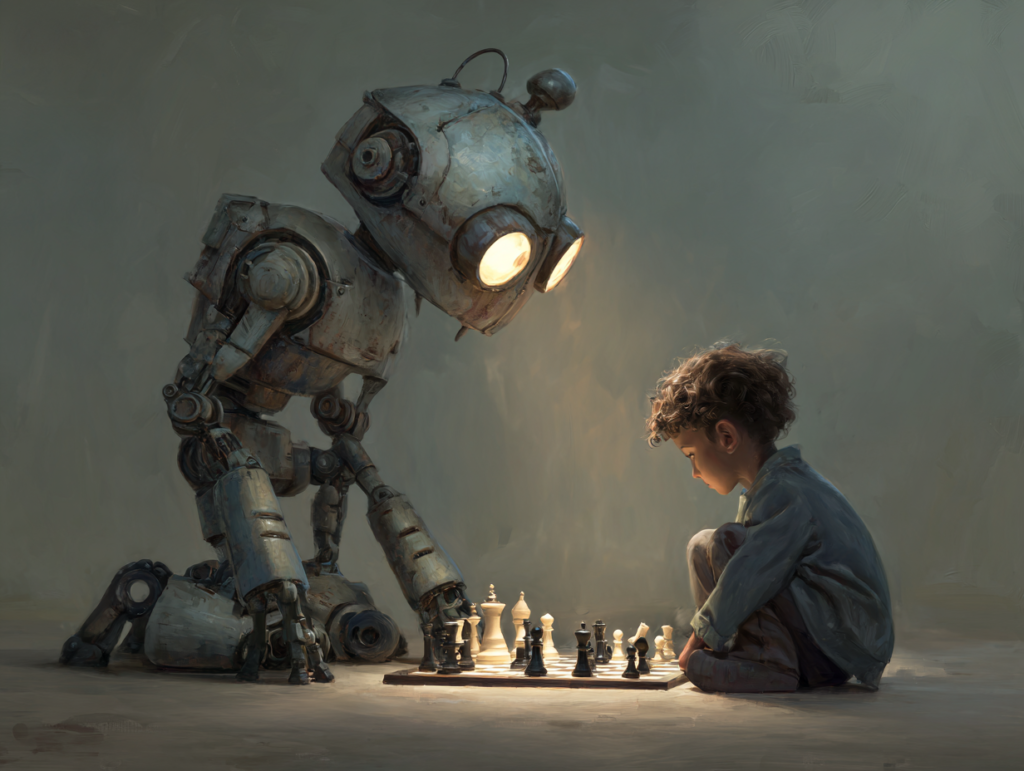
AI as a Tool for Depth, Not Just Speed
The same environment that can reinforce:
- speed
- immediacy
- external reliance
can also be used to support:
- deeper thinking
- guided exploration
- structured learning
The difference is not in the tool itself—
but in how interaction patterns are shaped.
For example:
- AI can provide instant answers
or it can be used to ask better questions - It can complete thoughts
or it can help expand them - It can remove effort
or it can guide effort more effectively
Reintroducing Friction
One of the most important ideas here is simple:
Not all friction is a problem.
Some forms of friction are part of development.
- waiting
- thinking
- struggling
- not knowing
These are not obstacles to learning.
They are part of how certain patterns form.
Which means:
Reducing all friction may also reduce opportunities
to develop certain responses.
So the goal is not to eliminate friction entirely—
but to allow the right kinds of experiences to repeat.
Small Shifts, Repeated
Because plasticity works through repetition,
change does not require dramatic interventions.
It comes from:
- small differences
- repeated over time
A moment of thinking before answering.
A space where uncertainty is tolerated.
A decision made without external input.
These are small.
But when repeated,
they begin to shape new patterns.
A Different Way to See It
Instead of trying to control outcomes directly,
it becomes more useful to ask:
“What patterns are being practiced most often?”
Because whatever is practiced,
the brain will adapt to.
Practical Awareness
Understanding these patterns does not require strict control.
It does not require eliminating technology,
or managing every moment of interaction.
What it changes is something simpler:
what we notice
Instead of focusing only on:
- how much time is spent
- how often something is used
attention shifts toward:
how the interaction is happening
Notice the Pattern, Not Just the Behavior
A child asking a question is not the issue.
What matters is:
- Is the question explored?
- Or immediately resolved?
Using AI is not the issue.
What matters is:
- Is it used to think?
- Or to replace thinking?
The same behavior can reinforce very different patterns,
depending on how it is repeated.
Look for Repetition
Single moments rarely shape development.
Patterns do.
So the key question becomes:
“Is this happening often enough to become a default?”
- Occasional instant answers do not define a pattern
- Constant instant resolution might
- Occasional external feedback is not a problem
- Continuous reliance on it can shape evaluation habits
Allow Space for Different Responses
Because development is shaped by repetition,
variation matters.
If every situation is resolved quickly,
one pattern dominates.
If different responses are experienced:
- sometimes thinking
- sometimes waiting
- sometimes exploring
- sometimes receiving help
Then multiple patterns can develop.
This creates flexibility.
Reintroduce Simple Experiences
Not as rules—
but as opportunities.
Moments where:
- a question remains open
- a problem is worked through
- a thought is completed internally
- uncertainty is tolerated
These do not need to be forced.
They only need to exist—
and repeat.
A Subtle but Powerful Shift
Instead of trying to shape outcomes directly:
focus on what is being practiced
Because over time:
what is practiced becomes what feels natural
The Real Question
The brain adapts.
This is not a theory.
It is a fundamental part of how development works.
Through repeated experience,
patterns form.
Through those patterns,
tendencies emerge.
And over time,
those tendencies become what we recognize as:
- habits
- preferences
- ways of thinking
- even parts of identity
This process has always been present.
What has changed is the environment in which it unfolds.
Today, children are growing up in systems that are:
- faster
- more responsive
- less constrained by friction
And as a result,
the patterns being repeated are changing.
Not suddenly.
Not dramatically.
But consistently.
So the question is not:
Is AI changing the brain?
It already does—just as every environment does.
The more important question is:
What patterns are being repeated often enough to shape how the brain responds?
Because whatever those patterns are,
the brain will adapt to them.
Not by force.
Not by intention.
But quietly—through repetition.
And over time,
that direction becomes the way we think,
the way we respond,
and the way we experience the world.
Which leaves us with a final question:
In which direction is this shaping happening?
And once we begin to see that,
we are no longer just observing development.
We are beginning to understand it.
Frequently Asked Questions
What is neuroplasticity in simple terms?
Neuroplasticity is the brain’s ability to change based on experience.
It means that repeated thoughts, actions, and responses strengthen certain neural patterns, making them easier and more automatic over time.
In children, this process plays a major role in how habits, attention, and ways of thinking develop.
How does neuroplasticity affect child development?
Neuroplasticity shapes child development by reinforcing patterns of response.
When children repeatedly respond to situations in certain ways—such as thinking through problems, seeking quick answers, or relying on feedback—the brain becomes more efficient at those patterns.
Over time, these patterns are experienced as traits like patience, attention, or independence.
Does AI change a child’s brain?
AI does not change the brain in a unique or unnatural way.
Like any environment, it influences development through repeated interaction.
What makes AI different is that it can:
respond instantly
provide constant feedback
reduce effort and delay
This can accelerate how quickly certain patterns are reinforced.
Is using AI harmful for children’s development?
AI itself is not inherently harmful.
The impact depends on how it is used and what patterns are repeated.
If AI is used in ways that encourage:
passive consumption
constant external answers
immediate resolution
it may reinforce those patterns.
If it is used to:
explore ideas
support thinking
guide learning
it can strengthen beneficial patterns instead.
What does “patterns become traits” mean?
“Patterns become traits” means that repeated ways of responding eventually feel like part of who we are.
For example:
repeatedly waiting and thinking → patience
repeatedly seeking instant answers → impatience
Traits are not built instantly—they emerge from patterns that are practiced over time.
What is “plasticity direction”?
Plasticity direction refers to the way the brain adapts based on repeated experiences.
The brain does not decide what is good or bad—it becomes more efficient at what it does most often.
So the key question is not whether the brain is changing, but in which direction it is being shaped.
Why are sensitive periods important in development?
Sensitive periods are stages where the brain is especially responsive to experience.
During early childhood and adolescence, repeated patterns can have a stronger influence because the brain is organizing itself more rapidly.
This means that timing matters—not just what is experienced, but when.
How can parents support healthy brain development with AI?
Instead of focusing only on limiting use, it helps to focus on patterns.
Parents can support development by:
encouraging thinking before answering
allowing moments of uncertainty
using AI as a tool for exploration, not replacement
Small repeated experiences—like reflection, effort, and decision-making—help shape stronger cognitive patterns over time.
Is instant access to answers reducing children’s patience?
Instant answers do not directly “reduce” patience.
However, if a child repeatedly resolves uncertainty immediately, the brain may become more efficient at avoiding delay.
Over time, this pattern can be experienced as impatience.
Can neuroplasticity be reversed or changed?
Neuroplasticity is ongoing.
Patterns are not permanent—they can change when new experiences are repeated consistently.
This means that direction can be adjusted over time by introducing different patterns of response, such as reflection, effort, and independent thinking.
Is neuroplasticity good or bad?
Neuroplasticity is neither good nor bad—it is a neutral process.
It simply reflects how the brain adapts to repeated experiences.
The outcome depends on which patterns are reinforced most often.