Why Social and Emotional Learning Matters in the Age of AI
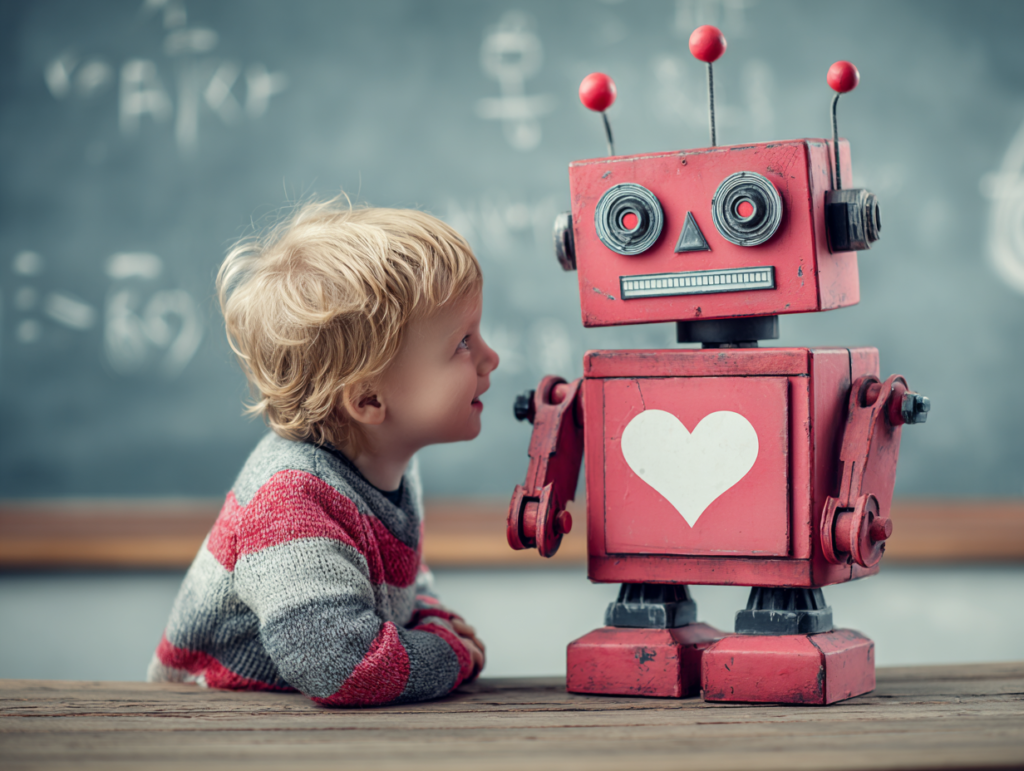
Artificial intelligence is rapidly changing the landscape of education. Tools powered by AI can now answer questions, explain difficult concepts, assist with writing, and even guide students through complex problems. In many cases, they provide instant access to knowledge that once required hours of research.
For students, this can be an extraordinary resource. AI systems can support curiosity, accelerate learning, and help clarify ideas that might otherwise remain confusing. The ability to explore information so easily has the potential to expand intellectual horizons in ways previous generations could hardly imagine.
Yet this technological shift also raises a deeper question.
If machines can increasingly assist with thinking, explaining, and producing information, what are the abilities that remain fundamentally human?
Knowledge alone has never been the whole story of education. Children must also learn how to understand themselves, regulate their emotions, navigate relationships, and make thoughtful decisions. These capacities do not develop through information alone. They emerge through experience, reflection, and interaction with other people.
In other words, while artificial intelligence can support cognitive learning, it cannot replace the human processes through which children develop emotional awareness, empathy, and social understanding.
This is where the concept of social and emotional learning becomes increasingly important. As education continues to evolve in the presence of powerful technologies, these deeply human skills may become some of the most essential abilities children need to develop.
What Is Social and Emotional Learning?
Social and emotional learning, often abbreviated as SEL, refers to the process through which children learn to understand themselves, manage emotions, build relationships, and make responsible decisions. In recent decades, educators and psychologists have increasingly recognized that these capacities are just as important for healthy development as academic knowledge.
One of the most widely used frameworks for understanding SEL was developed by the Collaborative for Academic, Social, and Emotional Learning (CASEL). Their model describes five core competencies that support children’s social and emotional growth.
The first is self-awareness, the ability to recognize one’s emotions, thoughts, and personal strengths. Children gradually learn to identify what they are feeling and to understand how those feelings influence their behavior.
The second is self-management, which involves regulating emotions, controlling impulses, and developing the ability to persist through challenges. Learning how to tolerate frustration and recover from setbacks is a critical part of this process.
The third competency is social awareness, the ability to understand the perspectives and feelings of others. This includes empathy, cultural awareness, and the ability to recognize the needs of people around us.
The fourth is relationship skills. Children must learn how to communicate effectively, cooperate with others, resolve conflicts, and maintain healthy relationships.
Finally, responsible decision-making refers to the ability to reflect on choices, consider consequences, and act in ways that are thoughtful and ethical.
Together, these competencies form the foundation of social and emotional learning. Rather than focusing only on academic knowledge, SEL recognizes that education must also support the development of emotional intelligence, interpersonal understanding, and reflective thinking.
In many educational systems, SEL programs are now being integrated into classroom practices, helping students develop these capacities alongside traditional academic skills.
Why Social and Emotional Skills Are Becoming Even More Important
Social and emotional learning did not emerge because of artificial intelligence. Long before the rise of digital technologies, educators and psychologists recognized that children’s development depends not only on intellectual ability but also on emotional awareness, self-regulation, and the capacity to form healthy relationships.
However, the technological environment in which children are growing up is changing rapidly. Artificial intelligence is beginning to reshape how students access information, complete tasks, and interact with learning tools. These changes may influence not only how children learn but also how they experience challenge, feedback, and decision-making during the learning process.
AI-assisted learning offers remarkable advantages. Students can receive instant explanations, personalized guidance, and help with complex problems. Difficult concepts can be clarified quickly, and information that once required extensive research can now be explored within seconds.
Yet these same features may subtly alter some of the experiences through which important psychological skills traditionally develop.
Learning has always involved a certain amount of friction—moments of confusion, frustration, trial and error, and gradual discovery. These experiences help children develop patience, resilience, and emotional regulation. When intelligent systems provide immediate solutions, some of these developmental moments may occur less frequently.
In addition, AI systems often provide strong external guidance. When a student becomes accustomed to consulting intelligent systems for answers, explanations, or decisions, the process of forming independent judgments may require more deliberate attention. Developing an internal sense of evaluation and reflection becomes increasingly important in such environments.
Finally, many forms of AI-assisted learning involve interaction primarily between the student and a digital system. While these tools can support cognitive understanding, they do not replace the complex social interactions through which children learn empathy, cooperation, and perspective-taking.
For these reasons, the presence of powerful cognitive technologies does not reduce the importance of social and emotional learning. Instead, it highlights its significance. As artificial intelligence expands the ways information can be processed and delivered, the human capacities that shape how individuals understand themselves and relate to others become even more central to healthy development.
The Emotional Gap of the AI Age

Artificial intelligence can assist with many aspects of cognitive learning. It can explain ideas, provide feedback, suggest solutions, and guide students through difficult material. In many ways, these tools can make learning more efficient and accessible.
Yet emotional and social development follow a very different path.
Many of the skills associated with social and emotional learning do not emerge from receiving correct answers. They develop through experiences that are often unpredictable, uncomfortable, or complex. Moments of disagreement, frustration, misunderstanding, and cooperation are part of the process through which children learn to understand both themselves and others.
For example, learning to regulate emotions often begins when things do not go smoothly. A child may feel frustrated when a problem is difficult to solve, disappointed when a plan fails, or upset during a conflict with a friend. These situations require the child to recognize their emotions, manage their reactions, and gradually develop more mature ways of responding.
Similarly, empathy and perspective-taking grow through interaction with other people. Negotiating disagreements, repairing misunderstandings, and cooperating with peers all help children develop a deeper awareness of how their actions affect others.
AI-assisted learning environments can support intellectual understanding, but they do not fully replicate these relational experiences. A digital system can provide information and feedback, yet it cannot replace the social dynamics through which many emotional and interpersonal skills develop.
For this reason, it is possible for cognitive learning to become increasingly supported by intelligent systems while emotional and social development still depends heavily on human interaction and lived experience.
This creates what might be called an emotional gap in the age of AI. As tools become more capable of assisting cognitive tasks, educators and parents may need to pay even greater attention to the environments where children develop empathy, resilience, self-awareness, and relationship skills.
Social and emotional learning helps address this gap by intentionally cultivating the human capacities that emerge through reflection, interaction, and emotional experience.
The Neuroscience of Social and Emotional Development
Research in developmental neuroscience helps explain why social and emotional learning plays such an important role in healthy development. Emotional awareness, empathy, impulse control, and reflective decision-making are not simply personality traits. They are connected to the gradual maturation and coordination of different systems within the brain.
The psychiatrist and neuroscientist Daniel J. Siegel describes healthy mental development as a process of integration. Integration refers to the linking of different parts of the brain and mind so that they can work together in a coordinated way.
For example, emotional centers of the brain generate powerful feelings such as fear, anger, excitement, and joy. Other regions, particularly those associated with the prefrontal cortex, help regulate these emotional responses by supporting reflection, planning, and impulse control. When these systems communicate effectively, individuals are better able to recognize their emotions without becoming overwhelmed by them.
Social experiences also play an essential role in this process. Relationships with parents, teachers, and peers provide the environment in which children learn to interpret emotional signals, respond to others’ needs, and repair misunderstandings. Through these interactions, neural pathways that support empathy, cooperation, and self-regulation gradually strengthen.
Social and emotional learning practices support this developmental process by helping children become more aware of their inner experiences while also learning how to navigate relationships with others. Activities that encourage reflection on feelings, perspective-taking, and responsible decision-making help strengthen the connections between emotional and cognitive systems.
From this perspective, SEL is not simply an educational trend. It reflects a growing understanding that the development of a healthy mind depends on integrating emotional awareness, social understanding, and reflective thinking.
In a technological environment where many cognitive tasks may increasingly be supported by intelligent systems, these integrative capacities become even more important. They help children develop the psychological stability and self-understanding needed to navigate a complex world.
Developing an Inner Compass

Beyond teaching specific social and emotional skills, social and emotional learning also supports something deeper: the gradual development of an internal sense of guidance.
As children grow, they must learn not only how to follow rules or respond to external expectations, but also how to reflect on their own experiences and make thoughtful judgments. This capacity develops slowly through emotional awareness, self-reflection, and the ability to consider the consequences of one’s actions.
The psychologist Carl Rogers described this developmental shift as the movement toward an inner locus of evaluation. Instead of relying entirely on external approval or authority, individuals gradually learn to evaluate their own feelings, values, and decisions. They develop an internal reference point that helps guide their behavior.
Social and emotional learning contributes to this process by encouraging children to reflect on their emotions, understand their motivations, and think carefully about their choices. When children learn to pause, examine their reactions, and consider different perspectives, they begin to build a more stable internal framework for decision-making.
In a world where intelligent systems can provide suggestions, explanations, and answers almost instantly, this inner compass becomes particularly important. Children will increasingly encounter powerful tools that offer guidance and information, but the ability to interpret that information and integrate it with one’s own values remains a human responsibility.
Developing this internal capacity for reflection helps ensure that young people are not only capable of accessing knowledge, but also capable of understanding themselves and making meaningful decisions within a complex technological environment.
How AI Could Support Social and Emotional Learning
If social and emotional development becomes increasingly important in an AI-assisted world, an important question follows: can these technologies also support that development?
Although artificial intelligence cannot replace the relational experiences through which empathy and emotional understanding grow, certain tools may help support reflection and awareness when used thoughtfully.
For example, AI-powered tools could encourage students to reflect on their emotional experiences. A child might use a system to journal about a challenging day, explore different perspectives in a social situation, or think through how their actions may affect others. In these contexts, the technology acts less as an authority and more as a reflective prompt.
Educators may also find ways to use AI tools to design learning activities that encourage perspective-taking and social awareness. Interactive scenarios, guided reflections, and thoughtful questions could help students explore complex emotional and interpersonal situations in ways that deepen their understanding.
However, these possibilities depend entirely on how the technology is used. Social and emotional development remains deeply connected to real relationships and lived experiences. Conversations with parents, cooperation with peers, and guidance from teachers continue to provide the environments where empathy, trust, and social understanding develop.
For this reason, artificial intelligence should be understood not as a replacement for these experiences, but as a supporting tool that can encourage reflection within a broader human-centered learning environment.
The Real Goal of Education in a Technological World
These changes invite a deeper question about the purpose of education itself.
For many generations, schools have focused primarily on transmitting knowledge and developing intellectual skills. This focus made sense in a world where information was scarce and accessing reliable knowledge required significant effort.
Today, the situation is changing. Information has become widely accessible, and intelligent systems can assist with many cognitive tasks that once required extensive memorization or research.
This does not make intellectual development less important. Instead, it shifts the balance of what education must emphasize.
Beyond helping students acquire knowledge, education must increasingly support the development of the capacities that shape how knowledge is used. These include empathy, emotional awareness, responsible decision-making, and the ability to build meaningful relationships with others.
Social and emotional learning contributes to this broader purpose. By helping children develop self-awareness, emotional regulation, and social understanding, SEL supports the formation of individuals who can navigate complexity, cooperate with others, and reflect thoughtfully on their choices.
In a world shaped by powerful technologies, these human capacities become even more important for guiding how knowledge and tools are used.
The Human Side of Learning
Artificial intelligence is rapidly expanding the ways knowledge can be accessed and explored. Students today can receive explanations, guidance, and feedback from systems that previous generations could hardly imagine.
Yet the presence of powerful cognitive tools does not eliminate the deeper developmental tasks of childhood. Children must still learn how to understand their emotions, navigate relationships, tolerate frustration, and make thoughtful decisions about their actions.
Social and emotional learning addresses these human dimensions of development. It helps cultivate self-awareness, empathy, emotional regulation, and responsible judgment—capacities that shape how knowledge and technology are ultimately used.
As intelligent systems become more capable of assisting with thinking, the role of education may become clearer: not only to help children acquire information, but to support the development of the human qualities that guide how that information is interpreted and applied.
In this sense, social and emotional learning is not separate from academic education. It is part of the broader effort to ensure that, in a world increasingly shaped by intelligent machines, the development of thoughtful and self-aware human beings remains at the center of learning.
Frequently Asked Questions
What is social and emotional learning?
Social and emotional learning (SEL) refers to the process through which children develop skills such as emotional awareness, empathy, relationship building, and responsible decision-making. These abilities help students understand their own emotions, interact effectively with others, and navigate social situations in healthy ways.
Many educational systems now incorporate SEL into their teaching practices to support both academic success and psychological well-being.
Why is social and emotional learning important for children?
Social and emotional learning helps children develop essential life skills beyond academic knowledge. These include emotional regulation, empathy, cooperation, resilience, and self-awareness.
Research shows that students who develop strong social and emotional skills are better able to manage stress, build positive relationships, and make thoughtful decisions in school and everyday life.
How does artificial intelligence affect children’s learning?
Artificial intelligence is changing how students access information and solve problems. AI tools can provide explanations, help with assignments, and guide students through complex topics.
While these tools can support cognitive learning, they do not replace the emotional and social experiences through which children develop empathy, self-regulation, and interpersonal understanding.
Can artificial intelligence support social and emotional learning?
AI tools may support aspects of social and emotional learning when used thoughtfully. For example, reflective prompts, journaling tools, or guided discussions can help students think about their emotions and social interactions.
However, social and emotional development still depends primarily on real relationships with teachers, parents, and peers.
What are the main skills taught in social and emotional learning?
Social and emotional learning programs typically focus on five core areas:
self-awareness
self-management
social awareness
relationship skills
responsible decision-making
Together, these skills help children understand themselves, regulate their emotions, and interact constructively with others.
Why might social and emotional learning become more important in the age of AI?
As artificial intelligence becomes more capable of assisting with cognitive tasks, human skills such as empathy, emotional awareness, and ethical decision-making become increasingly valuable.
Social and emotional learning helps ensure that children develop the human capacities needed to use technology responsibly and interact thoughtfully with others.
Can technology replace social and emotional development?
Technology can support learning and reflection, but it cannot replace the experiences through which emotional and social skills develop. Children learn empathy, cooperation, and emotional regulation through real interactions, challenges, and relationships.
For this reason, social and emotional learning remains an essential part of education even as technology becomes more integrated into learning environments.
Can AI replace teachers in social and emotional learning?
Artificial intelligence can assist with many aspects of education, such as explaining concepts, guiding students through problems, and providing personalized feedback. However, social and emotional learning depends heavily on human relationships and lived experiences.
Teachers play an essential role in helping students navigate emotions, resolve conflicts, develop empathy, and build trust within a learning community. These processes involve subtle social cues, emotional understanding, and real interactions that technology cannot fully replicate.
For this reason, AI may support certain reflective or educational activities, but it cannot replace the human relationships that are central to social and emotional development.