Skip to content
No results
  • About Alice in AI Land
  • Blog
  • contact
  • Disclaimer
  • Editorial Guidelines
  • Home
  • Privacy Policy
  • Terms and Conditions
Alice in AI Land

Childhood, Development, and Artificial Intelligence

  • Home
  • Blog
  • About
Alice in AI Land

Childhood, Development, and Artificial Intelligence

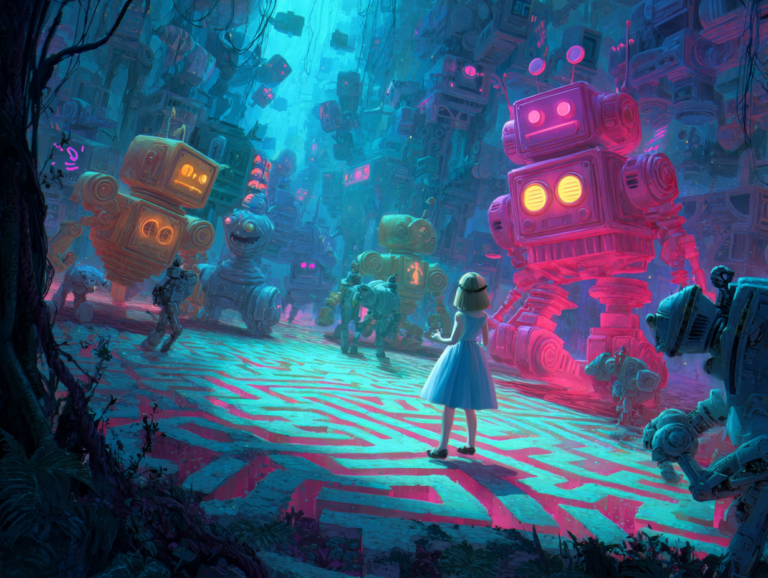
A child standing in a surreal AI landscape surrounded by intelligent machines, symbolizing the Alice in AI Land metaphor for growing up with artificial intelligence

Alice in AI Land: A Metaphor for Growing Up With Machines

Alice in AI Land is not a guide to artificial intelligence. It is a metaphor for what it feels like to grow up with machines that speak fluently, respond instantly, and quietly reshape learning. This essay explains why stories and perspective come before rules, and why orientation matters more than answers in the age of AI.


Read MoreAlice in AI Land: A Metaphor for Growing Up With Machines
A child surrounded by books, symbolizing curiosity, learning, and the foundations of psychology literacy and child development

Psychology Literacy: The Missing Skill in Modern Parenting

Parenting has never been about caring more — it’s been about understanding better. Psychology literacy helps parents interpret behavior through a developmental lens, reducing confusion, conflict, and unnecessary struggle in a rapidly changing world.

Read MorePsychology Literacy: The Missing Skill in Modern Parenting
Children wearing safety goggles conduct a hands-on experiment together, symbolizing childhood learning and the shared experiment of growing up in the age of AI

The Long Childhood Experiment: We Are All Test Subjects

AI is not something we are introducing to childhood from the outside. It is an environment children are growing up inside — one with no finished map. This article reflects on AI childhood as an ongoing experiment that includes parents, educators, designers, and society itself.

Read MoreThe Long Childhood Experiment: We Are All Test Subjects
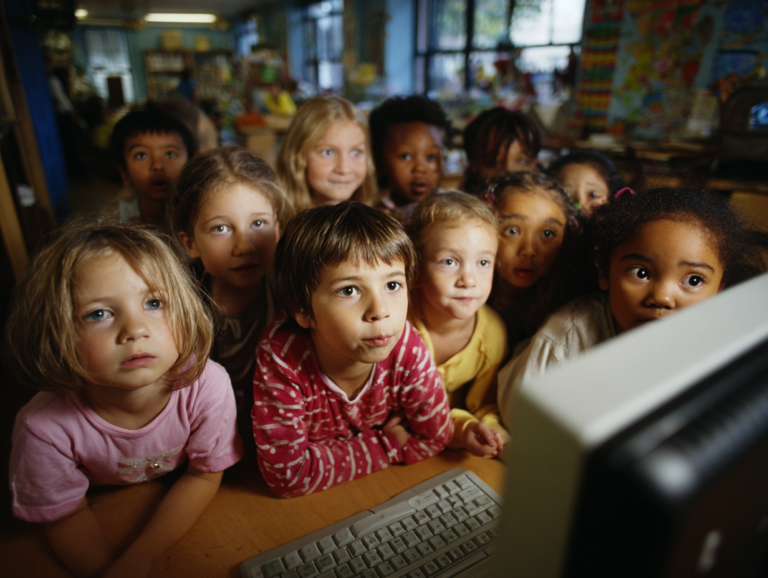
Children watching a computer screen in a classroom, illustrating how AI and digital systems enter childhood and shape attention, learning, and power dynamics

Who Benefits First? AI, Childhood, and Power

When AI becomes part of childhood, its effects are not distributed evenly. This article explores who benefits first, how power operates quietly through helpful systems, and why childhood is where influence leaves the longest trace.

Read MoreWho Benefits First? AI, Childhood, and Power
A young child holding their hands open in a gesture of curiosity and uncertainty, representing the natural process of asking questions and learning

When Children Stop Asking Why: Curiosity in the Age of Instant Answers

Curiosity doesn’t disappear loudly. It concludes quietly. This article explores how instant answers change the space where children’s questions grow — and why that space matters.

Read MoreWhen Children Stop Asking Why: Curiosity in the Age of Instant Answers
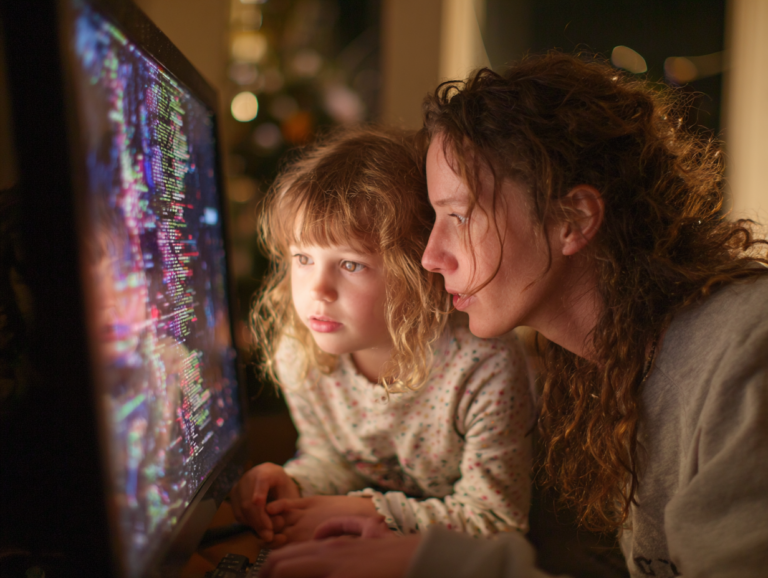
A parent and young child looking together at a computer screen, illustrating how AI and digital tools influence emotional regulation and learning in early childhood

How AI Changes Us — And Why That Matters for Parenting

Before AI shapes children, it changes us. This article explores how adults already use AI to regulate thinking, why children feel these effects more deeply, and how mindful self-awareness—not fear—leads to better parenting in the age of AI.

Read MoreHow AI Changes Us — And Why That Matters for Parenting
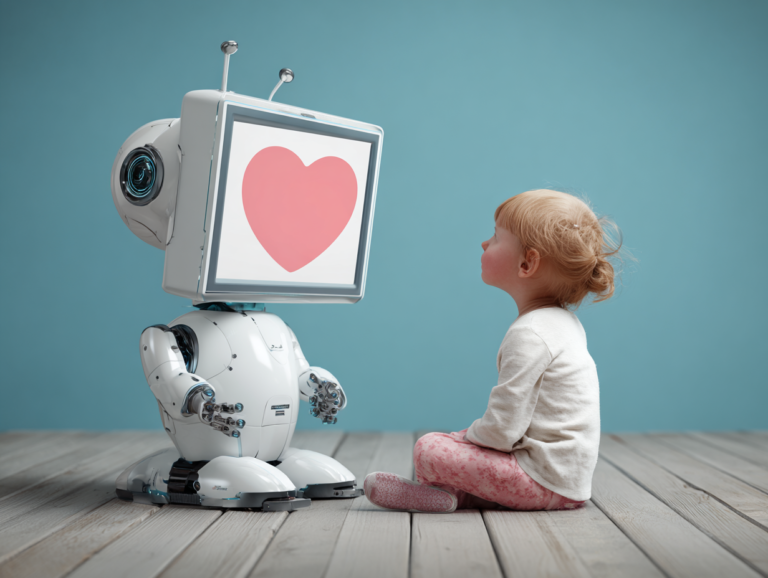
A child sitting face to face with a robot displaying a heart, symbolizing AI empathy and its influence on children’s emotional intelligence

AI, Empathy, and the Emotional Life of Children: Understanding Synthetic Feelings

Children are learning to feel in a world where empathy can be simulated by machines. This article explores how AI shapes emotional intelligence from the inside — and why human connection still matters.

Read MoreAI, Empathy, and the Emotional Life of Children: Understanding Synthetic Feelings
A child sitting in front of a computer screen symbolizing digital addiction, attention-driven technology, and the psychological impact of addictive tech on children

How Tech Products Are Engineered to Be Addictive — And What It Means for Children

Many apps and games are designed to keep users coming back — but what happens when these mechanisms are applied to developing minds? This article explains how addictive technology works and what it means for children.

Read MoreHow Tech Products Are Engineered to Be Addictive — And What It Means for Children
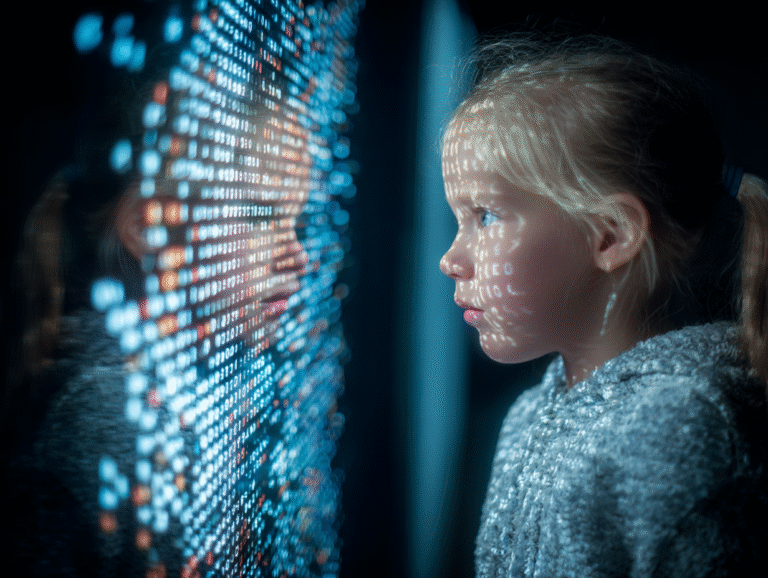
A young girl gazing at her digital reflection in a glowing mirror of binary code, symbolizing how AI shapes childhood identity and self-perception

AI and Childhood Identity — Growing Up in a Digital Mirror

Children now grow up surrounded by intelligent mirrors — algorithms that reflect, predict, and influence who they become.
This essay explores how AI shapes childhood identity, self-worth, and authenticity — and how we can help the next generation see clearly in a world that constantly talks back.

Read MoreAI and Childhood Identity — Growing Up in a Digital Mirror
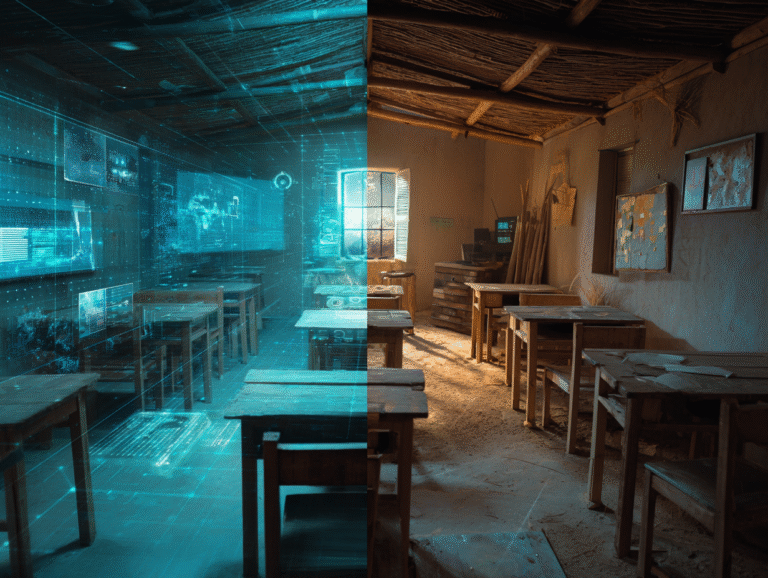
Split classroom symbolizing the digital divide in education — one half futuristic and glowing with AI technology, the other half rustic and analog, representing global inequality in access to artificial intelligence and learning resources.

The Digital Divide 2.0: Inequality in the Age of AI

As artificial intelligence enters classrooms, a new form of inequality emerges — not about who has devices, but who learns to think with them. From algorithmic bias to global access gaps, this piece explores how AI could either deepen or dissolve the world’s educational divide, and why empathy and ethics must guide its design.

Read MoreThe Digital Divide 2.0: Inequality in the Age of AI
Prev
1 2 3 4
Next

What to Read Next

  • Child sitting on a large compass symbolizing inner locus of evaluation and self-guided thinking in the digital ageThe Inner Locus of Evaluation: Raising Self-Guided Minds in the Digital Age
  • A young child holding their hands open in a gesture of curiosity and uncertainty, representing the natural process of asking questions and learningWhen Children Stop Asking Why: Curiosity in the Age of Instant Answers
  • Teenage girl looking at her smartphone with a thoughtful expression, illustrating adolescent emotional development and the impact of social media on teenagersWe’ve Seen This Before: Social Media, Teenagers, and the Coming AI Shift
  • A small robot standing in a classroom in front of a chalkboard, symbolizing how artificial intelligence is entering children’s learning environments and raising questions about development and parentingWhy Most Parenting Advice About AI Is Shallow — And What Actually Helps
  • A young girl gazing at her digital reflection in a glowing mirror of binary code, symbolizing how AI shapes childhood identity and self-perceptionAI and Childhood Identity — Growing Up in a Digital Mirror

  • About
  • Editorial Guidelines
  • Privacy Policy
  • Terms and Conditions
  • Disclaimer
  • contact

Copyright © 2025-2026 - Alice in AI Land